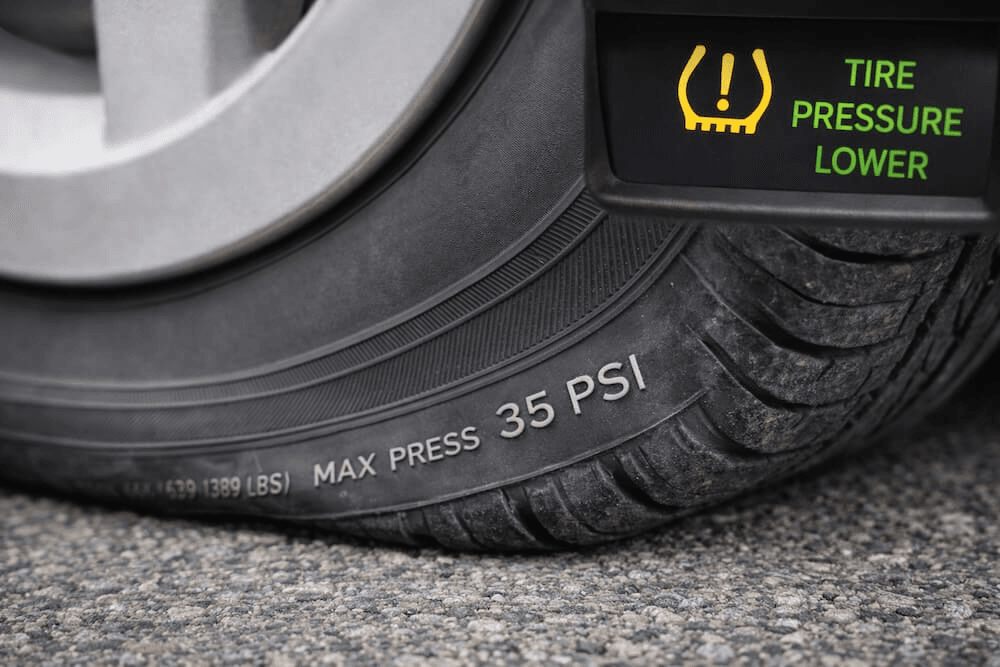
That “LOW TIRE PRESSURE” warning tends to show up at the worst time... usually on the first really cold morning when you’re trying to get to work or school on time. In Madison winters, it’s often not a mystery leak at all. It’s physics.
As temperatures drop, tire pressure drops too... roughly about 1 PSI for every 10°F decrease.
Why the Warning Happens More in Winter
Air molecules “slow down” when it’s cold, which reduces pressure in a sealed tire. That means...
-
- A tire that was fine yesterday afternoon can read low the next morning
- Big overnight temperature swings can trigger your TPMS light
- This is often seasonal... and fixable with a quick top-off
AAA notes the “rule of thumb” is ~1 PSI lost per 10°F drop, on top of the normal gradual monthly loss tires experience.
What to Do When the Light Comes On
Step 1... Do a quick visual check (before driving far)
If any tire looks obviously low or flat, don’t ignore it... pull into a safe spot and check pressure ASAP.
Step 2... Inflate to the door-jamb number (not the tire sidewall)
Your correct pressure is on the driver’s door placard (or owner’s manual), and that’s what you should inflate to.
Step 3... Check pressure when tires are “cold”
For the most accurate reading, check first thing in the morning (or after the car has been parked for ~3 hours).
Step 4... Give it a little time
After inflating properly, the TPMS light usually turns off after a short drive (varies by vehicle). If it doesn’t, recheck the pressures and consider a sensor issue. Cars sometimes have a reset switch.
When It Might Be More Than Temperature
A cold snap can reveal a slow leak you didn’t notice in warmer weather.
Consider getting it checked if...
-
- The same tire keeps dropping repeatedly
- You’re topping off weekly (or more)
- The light flashes (often indicates a TPMS system fault rather than low pressure)
A steady TPMS light typically means low pressure; a flashing pattern may indicate a system issue needing service.
Why Driving Underinflated Is a Bigger Deal Than It Feels
Underinflated tires can lead to...
-
- Faster or uneven tire wear
- Reduced fuel economy
- Less responsive handling/braking... especially on cold, wet roads
AAA and Consumer Reports both highlight the safety and performance downsides of running low.
Easy Winter Habit That Helps
Pick one day a month (like the first Saturday) and check all four tires + spare.
If we get a big temperature swing (like 60°F one day and 25°F the next), it’s worth checking sooner... because that’s when the light loves to appear.
Frequently Asked Questions
Is it normal for the TPMS light to come on during the first cold week?
Yes. Cold weather commonly drops pressure enough to trigger the light... even without a puncture.
Should I inflate to the number on the tire sidewall?
No. Use the vehicle manufacturer’s recommended pressure on the door placard.
How much does pressure really change with temperature?
A common rule is about 1 PSI per 10°F drop (sometimes reported as 1 to 2 PSI depending on conditions).
What if the light flashes?
A flashing TPMS light can indicate a system/sensor issue that may need diagnostic service.
Should I buy a tire inflator?
Always keep a tire inflator in your car. If you haven't noticed a lot of air stations at gas stations don't work. Click here for our recommendation.
In Madison, a winter “low tire pressure” light is often just a reminder that cold air contracts... and your tires need a quick top-off. A 3-minute pressure check can improve safety, fuel economy and tire life… and keep that dashboard warning from ruining your morning.





0 Comments
Join the conversation
Be the first to comment
Share your thoughts above.