
Common Grass Types in North Alabama Lawns |
Bermuda, zoysia, tall fescue and centipede grass all show up around Madison and Huntsville, but each one handles sun, shade, traffic and Alabama heat differently. |
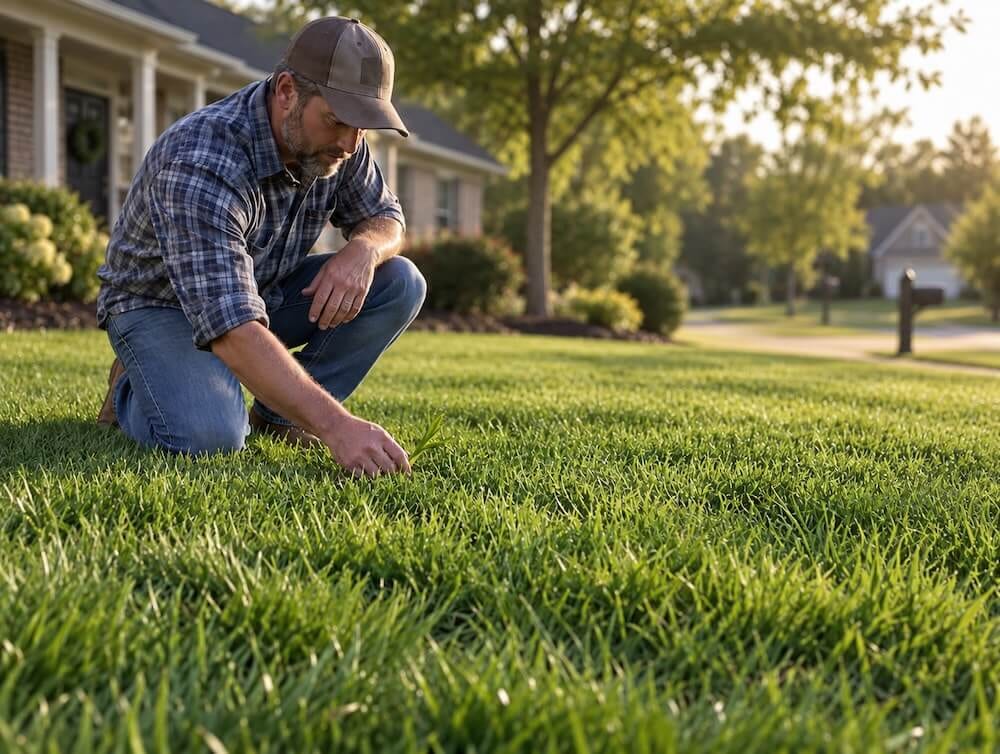
North Alabama lawns can be confusing because our area sits in a transition zone. Summers are hot. Winters can still get cold. One yard may bake in full sun while the next one has shade from mature trees, fences or the side of the house.
The tradeoff is shade. Bermuda grass wants sun. If the lawn sits under trees or along the north side of the house, Bermuda may thin out no matter how much fertilizer gets thrown at it.
Bermuda also goes dormant in cold weather. That means a brown winter lawn may be normal, not dead. It greens back up when soil temperatures and growing conditions improve.
Zoysia
Zoysia grass is another popular warm-season grass for North Alabama. It can make a dense, attractive lawn and usually handles some shade better than Bermuda grass. Alabama Extension includes zoysia grass among the turf grasses recommended for Alabama home lawns.
Zoysia is slower to establish and slower to recover from damage. That matters if kids, dogs or heavy foot traffic wear paths through the yard. Once it fills in, though, a zoysia lawn can feel thick underfoot and crowd out some weeds.
Many homeowners like zoysia because it has a cleaner look than common Bermuda. The downside is cost. Zoysia is often installed as sod or plugs, and it can take patience.
Tall Fescue
Tall fescue is the cool-season option that shows up in North Alabama, especially in shadier lawns. Alabama Extension describes tall fescue as a cool-season, perennial, bunch-type grass for north Alabama lawns.
Fescue grows more actively during cooler parts of the year. It can stay greener when warm-season grasses are brown, which is one reason people like it. It also works better in shade than Bermuda.
The hard part is summer. North Alabama heat can stress fescue, especially in full sun or poorly irrigated areas. It may need fall overseeding to keep a thick stand. Because it grows in clumps instead of spreading aggressively like Bermuda, bare spots do not always fill in on their own.
For North Alabama, it needs a little caution. Alabama Extension says centipede grass is not as cold tolerant as bermuda grass and zoysia grass and is only recommended in central and south Alabama. Its cold tolerance can improve with certain varieties, but homeowners in the Madison and Huntsville area should ask a local turf professional or Extension office before choosing it.
Centipede also does not recover from injury as quickly as Bermuda or zoysia. It may not be the best pick for yards with heavy play, dogs or regular foot traffic.
St. Augustine grass has a wider blade and can handle some shade, but it is less common around North Alabama than in warmer coastal or southern areas. It is more sensitive to cold than Bermuda and zoysia, so homeowners here should be careful before choosing it for a full lawn.
Alabama Extension lists St. Augustine grass among turf grasses recommended for Alabama home lawns, but site conditions matter. In Madison and Huntsville, winter cold, drainage and shade should all factor into the decision.
This is one of those grasses where a neighbor’s success does not guarantee your yard will match it. A protected yard with the right conditions may do fine. A colder, exposed yard may struggle.
How To Tell What You Have
Grass identification can be tricky because lawns often contain a mix. A front yard may be mostly Bermuda with zoysia patches. A shaded backyard may have fescue, weeds and bare soil. Older lawns can change over time as trees mature and sunlight patterns shift.
Start with the season. If the lawn is thick and green in July but brown in winter, it may be a warm-season grass like Bermuda or zoysia. If it looks better in spring and fall but struggles in August, tall fescue may be part of the picture.
Look at the blades and growth habit too. Bermuda spreads fast and has finer blades. Zoysia is dense and slower. Fescue grows in bunches. Centipede is lighter green and slower growing.
For full sun and heavy use, Bermuda grass is often the practical choice. For a thicker lawn with a little more shade tolerance, zoysia grass may be worth considering. For shaded areas in North Alabama, tall fescue can be a better fit, though it may need more attention during summer.
Centipede grass and St. Augustine grass can work in parts of Alabama, but North Alabama homeowners should be more careful with them. Cold tolerance, soil, shade and drainage can decide whether those grasses perform well or become a headache.
Before replacing a lawn, take pictures of the yard in summer and winter. Note where the sun hits, where water stands and where the grass thins. A lawn care company or Alabama Extension can give better advice when they see the actual conditions.
Wrap Up
Most Madison and Huntsville homeowners are dealing with some version of Bermuda, zoysia, fescue or a mix. The best grass is the one that matches the yard, not the one that looked good in a neighbor’s full-sun lawn.
Sun, shade, drainage, pets, kids and mowing habits matter. Pick the grass for the actual yard you have, then care for it on the schedule that grass needs. |

0 Comments
Join the conversation
Be the first to comment
Share your thoughts above.