
No HOA? Here’s What to Check Before Building in Your Backyard |
Sheds, workshops and detached garages may still be subject to permits, setbacks and other rules in Madison and Madison County |
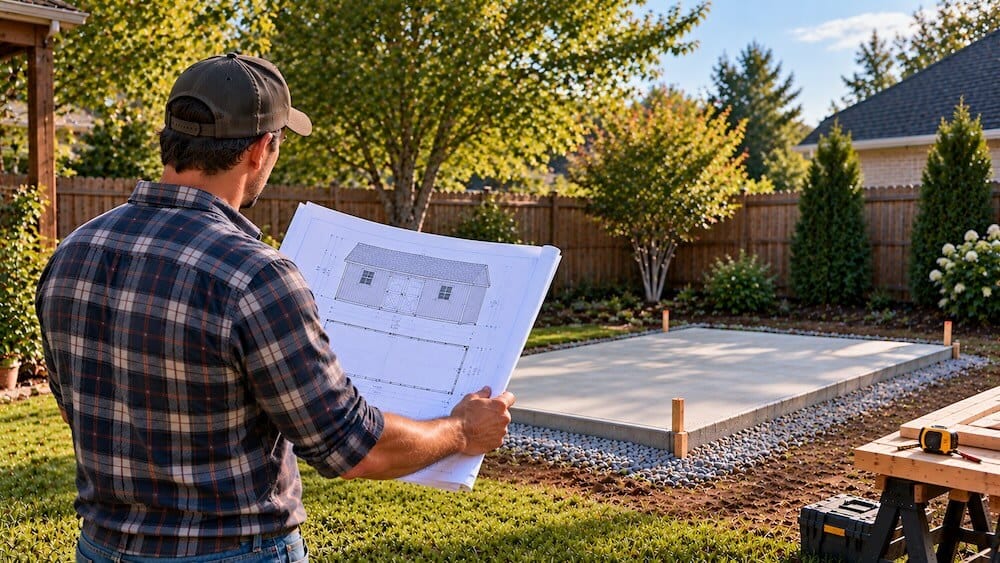
You have a backyard, no homeowners association and an idea.
Maybe it is a storage shed, workshop, detached garage, pool house, gazebo or a place to finally move the lawn equipment out of your garage.
If there is no HOA telling you what you can build, it can be tempting to assume the answer is simple: it is your property, so build it.
Not quite.
In the Madison area, what you can build can depend heavily on whether your property is actually inside the City of Madison or in unincorporated Madison County.
First Question: Who Has Jurisdiction Over Your Property?
Before shopping for a shed or pouring concrete, determine which government has jurisdiction over your parcel.
A Madison mailing address does not necessarily answer that question.
Madison County recommends checking the county tax map. Properties identified as Tax District 01 are under Madison County jurisdiction, while other tax districts can fall under cities such as Madison, Huntsville, Triana, Gurley, New Hope or Owens Cross Roads.
That distinction matters because the rules can be very different.
If You Live Inside the City of Madison
The City of Madison regulates accessory structures through its zoning and building rules.
The city specifically lists detached garages, carports, workshops, storage buildings, sheds, pool houses, pergolas and gazebos among projects that can fall under its permitting requirements.
One useful dividing line for a basic shed is 200 square feet.
The city's Building Department says an accessory building or shed that is 200 square feet or smaller does not require a building permit, while a shed or storage building larger than 200 square feet does.
But this is where homeowners need to be careful... not needing a building permit does not automatically mean you can put the structure anywhere you want.
Zoning, setbacks, easements and special districts can still affect placement.
Madison adopted a comprehensive update to its zoning ordinance in June 2026. Because the rules depend on the property's zoning designation and the structure you are proposing, the city directs homeowners to identify their zoning and verify applicable setbacks with the Planning Department before building.
So a 10-by-12 shed may fall below the city's 200-square-foot building-permit threshold, but you should still verify where it can legally sit on your particular lot.
If You Live in Unincorporated Madison County
This is where the answer changes significantly.
Madison County currently says it has no zoning requirements that limit construction projects in the way municipal zoning does.
That gives property owners considerably more flexibility, but it does not mean there are no rules.
The county still enforces building, residential, electrical, plumbing, mechanical, fuel gas, swimming pool and other applicable codes.
For residential work, Madison County says permits are required for new residential construction and for construction, renovations, repairs, alterations or additions costing $1,000 or more. Certain work involving plumbing, septic systems, electrical service, gas, mechanical equipment, pools and spas can require permits regardless of cost.
The county also has separate requirements for projects in special flood hazard areas.
In other words, county property may give you more freedom over what you build, but the structure may still need to meet construction and safety codes and may still require a permit.
Do Not Forget Easements
This is one of the easiest things to overlook.
An empty strip along the back or side of your property may contain a utility or drainage easement.
That can affect where a permanent structure should be placed even if there is plenty of physical room for it.
Check your survey or plat before deciding that the back corner of the yard is the perfect spot.
What If You Want Electricity or Plumbing?
A simple storage shed and a finished backyard workshop are not necessarily the same project.
Once you begin adding electrical service, plumbing, gas, heating or cooling, additional trade permits and code requirements can come into play.
This is especially important if your eventual plan is to use the building as an office, guest space or somewhere people will regularly occupy rather than simply storing tools and lawn equipment.
Madison County specifically warns that a portable shed or similar prefabricated structure designed for storage does not automatically meet the building-code requirements for human habitation.
No HOA Does Not Always Mean No Private Restrictions
Even without an active homeowners association, it is worth checking your deed, plat and subdivision documents for recorded covenants or restrictions that may still affect the property.
An HOA and a recorded property restriction are not necessarily the same thing.
Before You Buy the Shed
A good order of operations is simple.
First, confirm whether the parcel is inside Madison city limits or unincorporated Madison County.
Second, check your survey or plat for property lines, drainage areas and utility easements.
Third, describe the project accurately: size, height, location, foundation and whether it will have electricity, plumbing or HVAC.
Then contact the authority that actually has jurisdiction and ask whether your specific project requires a permit and what placement rules apply.
If you are inside Madison, the city's Planning Department handles zoning and setback questions while the Building Department handles building permits and inspections.
If you are in unincorporated Madison County, the Building Inspection Department can help determine the permits and code requirements that apply.
The Bottom Line
No HOA can certainly make a backyard project easier.
It just does not erase city ordinances, county building codes, easements, floodplain rules or recorded restrictions attached to the property.
Spend a little time checking those things before spending thousands of dollars on a building that arrives on a trailer.
The best time to discover that your dream workshop is three feet too close to something is while it is still a drawing on a piece of paper. |
Verify Before You Build Rules can change and the answer can depend on your exact parcel, zoning district and project. These official resources are the best places to verify the information before buying materials or scheduling construction.
Permit applications, requirements and contact information for the City Building Department. For permit questions, call 256-772-5644.
City of Madison Planning & Economic Development Use this for zoning, setbacks and questions about where an accessory structure can be placed. The Planning Department can be reached at 256-772-5630.
City of Madison Zoning & GIS Resources Use the city's zoning map and GIS tools to identify the zoning designation for a property and review the current zoning ordinance.
City of Madison Online Permit Portal Search permit information by address or start the city's online permit process.
Madison County Building Inspection Start here if the property is in unincorporated Madison County and you need help determining permit or building-code requirements.
Tip: When you call, have the property address and a basic description of the project ready, including the approximate dimensions, proposed location and whether you plan to add electricity, plumbing or HVAC. |
Simple tools before you start buying materials
A laser distance measure can make it easier to check distances across the yard and get a quick idea of how much space you actually have for the project.
A 100-foot tape measure is useful for physically laying out the proposed footprint and checking measurements against your survey or site plan.
Remember: Measuring the yard yourself is useful for planning, but it does not replace a survey or an official determination of property lines, setbacks or easements. |




0 Comments
Join the conversation
Be the first to comment
Share your thoughts above.