

Your Indoor Cat Is Missing. Here's What to Do First |
A practical guide to searching the house, finding a frightened cat nearby and getting your Madison neighbors involved |
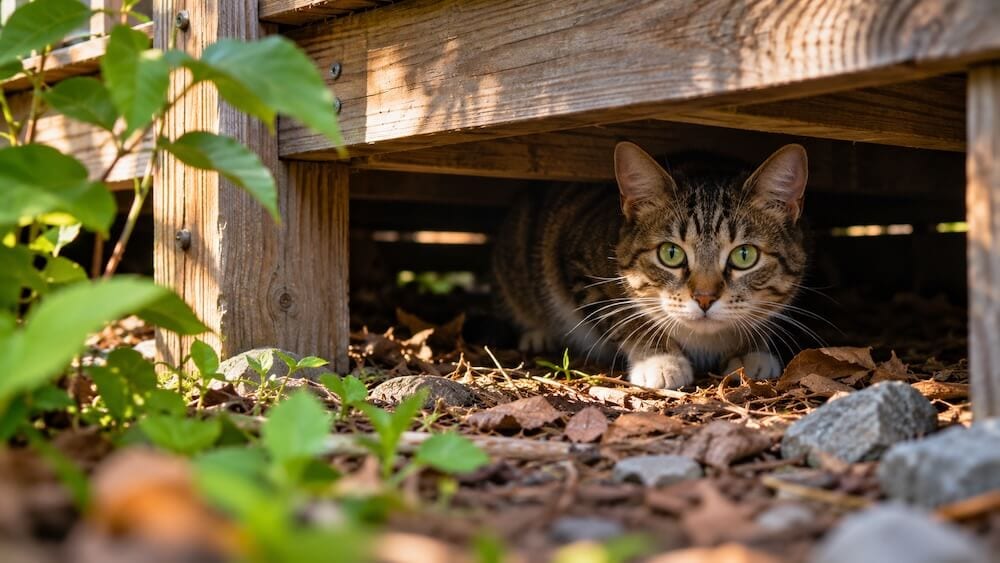
Before assuming your indoor cat escaped, check the places that seem impossible... closets, under beds, behind dressers, inside reclining furniture, under sofas, behind appliances, in laundry baskets, in cabinets and in the garage.
Check the spaces behind washers and dryers, inside box springs and around stored boxes with a flashlight. Call softly, pause and listen... a frightened or trapped cat may not answer even when it normally comes running.
Be especially careful around recliners, appliances and vehicles until you know your cat is not hiding inside.
Close each room's door after you've searched it thoroughly so the cat cannot quietly move back into a space you already cleared. Have someone watch open exits while you search and keep dogs and other pets separated to reduce noise and stress.
Search again later when the house is quiet because a cat that stayed hidden during the commotion may finally move.
If They Slipped Outside, Start Close to Home
An indoor-only cat suddenly outdoors may be overwhelmed by unfamiliar sounds, smells and open space. Many hide near their escape point rather than immediately roaming across the neighborhood, although some do travel farther.
Start with the porch, shrubs, deck, crawl spaces, sheds, garages, parked cars and the narrow gaps between fences and buildings. Get down to a cat's eye level and shine a flashlight into dark spaces, even during daylight.
At night, reflected eyes may help you spot a cat that is otherwise nearly invisible.
Ask nearby neighbors to physically check garages and sheds rather than simply keeping an eye out. Don't assume your affectionate cat will walk up to a stranger outside... fear can make even a social cat hide silently.
Search When the Neighborhood Gets Quiet
Early morning, late evening and other quiet periods can be useful times to look because traffic and activity have settled. Walk slowly, listen between calls and use the familiar voice your cat knows.
Bring a favorite treat bag or food container if its sound normally gets a reaction.
Don't shout repeatedly or send a large noisy group through the bushes, which may push a frightened cat deeper into hiding. If you see your cat, crouch down, speak softly and give it room to approach.
Avoid chasing or grabbing suddenly... a frightened cat may bolt even when it recognizes you.
Make Home the Easiest Place to Return
Put a familiar-smelling blanket, bed or an unwashed shirt near a sheltered entrance where you can monitor it. Offer a small amount of strong-smelling food at times when you can watch, then remove leftovers so they don't attract wildlife or other cats.
If you have a camera or doorbell camera, point it toward the entrance or food station to see whether your cat visits when nobody is watching.
Keep a secure carrier, towel and treats ready in case your cat appears.
Some families use an open door while actively supervising from inside, but only do so when it is safe and you can prevent other pets from escaping. Leaving a door open unattended can create new problems.
Advice about placing a used litter box outside is mixed because it may attract other animals, so familiar bedding and monitored food are more cautious first steps.
Tell People Who Can Actually Help
Report your missing cat to the local animal control agency and nearby shelters, giving them a clear recent photo, the approximate last-seen location, distinguishing markings and your contact information.
For Madison residents, that means contacting Madison Animal Control... also check with neighboring jurisdictions if your cat may have crossed city boundaries. Ask how to review found-animal reports and whether you should follow up in person, since a single phone message may not be enough.
Post in Nextdoor, relevant Madison and Huntsville neighborhood Facebook groups, local lost-and-found pet groups and your subdivision's community page.
Include the date, general area, photo, whether the cat is indoor-only and a clear instruction such as please do not chase... call or text with the sighting location.
Put readable flyers at neighborhood entrances and other permitted locations, with a large photo and a phone number. Ask neighbors to check security-camera footage from the hours after your cat was last seen.
If your cat is microchipped, report it missing to the chip registry and confirm your phone number is current.
Call nearby veterinary offices and emergency clinics as well because someone who finds an injured or friendly cat may take it there.
When You Get a Sighting, Slow Down
A reliable sighting can narrow the search much more than another hour of random walking. Ask the person exactly where and when they saw the cat, which direction it went and whether they have a photo.
Check the area quietly and consider placing a monitored camera or food station nearby.
If your cat repeatedly visits but won't approach, ask a shelter, rescue or experienced trapper about borrowing a humane live trap. Humane traps must be checked frequently and used with weather, wildlife and the animal's safety in mind.
Do not leave one set unattended for long periods.
Don't Give Up After the First Day
The first twenty-four hours can feel endless, but a silent cat is not necessarily a distant cat.
Repeat your close-to-home search, keep checking with shelters and refresh community posts with any new sightings. Expand the search gradually if you find no clues, especially around connected yards, drainage areas, sheds and such.
If your cat needs medication, is elderly or faces dangerous weather, tell animal control and local rescues so they understand the urgency.
Once your cat is home, offer water and a calm room and check for injuries, dehydration or unusual behavior. Contact a veterinarian promptly if your cat seems unwell, has been trapped without water or has gone an extended period without urinating.
A Quick Missing-Cat Checklist
Inside: Search every hiding spot, check dangerous machinery and furniture, close cleared rooms and search again when quiet.
Outside: Check under decks, bushes, cars and sheds... use a flashlight and look during quiet hours.
At home: Set out familiar bedding, monitor a small food station and prepare a carrier.
In the neighborhood: Tell animal control, shelters, vets, Nextdoor and local Facebook groups... distribute flyers and ask for camera footage.
After sightings: Record the exact location, avoid chasing and consider experienced help with a monitored humane trap.
Most importantly, keep checking close to home while you broaden the search.
Sometimes the cat you're looking for is much closer than you think. |




0 Comments
Join the conversation
Be the first to comment
Share your thoughts above.