

Fire Pit or Patio Heater? Four Ways to Stay Warm Outdoors This Fall |
Compare propane, traditional wood, smokeless wood and infrared heaters for smoke, smell, s'mores, cost and convenience. |
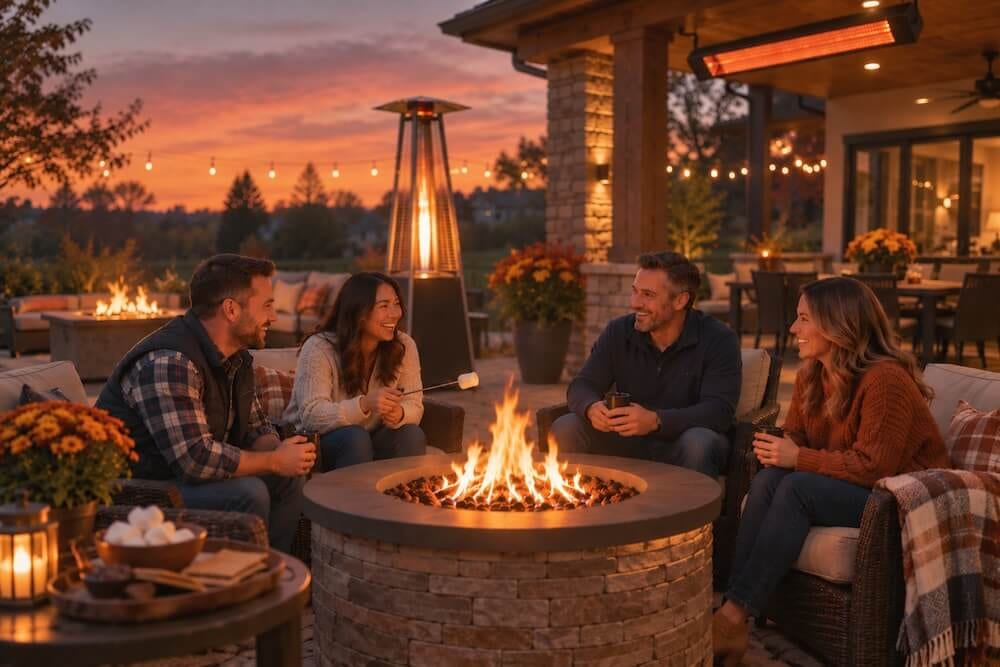
There’s a point in an Alabama fall when the backyard starts calling again. The mosquitoes ease up, the evenings get cooler, and suddenly sitting outside after dinner sounds a whole lot better than staying on the couch.
Maybe you’re picturing friends around a crackling fire. Maybe you just want to finish your coffee on the patio without freezing. Those are two different goals... and the best heater for one may not be the best for the other.
We looked at four ways to keep the outdoor season going... propane fire pits, traditional wood-burning fire pits, smokeless wood fire pits and electric infrared heaters. Here’s how to decide what belongs in your backyard. |
For quick weeknight gatherings: A propane fire pit keeps things simple. For family s’mores and campfire stories: Traditional wood is hard to beat. For frequent wood fires with less smoke: A smokeless fire pit deserves a look. For keeping a patio table or seating area comfortable: Electric infrared may be the more practical purchase. There isn’t one winner for every household. The better question is what you want to do outside once the sun goes down. |
Wood-Burning Fire Pits: The Backyard Campfire
There’s something about a real wood fire that’s hard to replace... the crackle of logs, the changing flames and everybody leaning in to roast a marshmallow. For families, that can turn an ordinary Friday evening into a memory.
Of course, the smoke rarely stays where you want it. Somebody always ends up moving their chair and your sweatshirt may still smell like the fire the next morning. You also have to store dry wood, manage sparks and clean out the ashes.
Our take: Choose wood if the fire itself is the activity. It’s usually the easiest place to start if your family wants traditional s’mores nights. |
Smokeless Fire Pits: Less Smoke, Same Campfire Feeling
What if you want that wood-fire experience without spending half the evening dodging smoke? That’s the appeal of smokeless fire pits. Designs from companies such as Solo Stove and Breeo use airflow to burn more of the smoke before it reaches your face.
The word smokeless deserves an asterisk. You can still get smoke when lighting the fire, adding damp logs or letting it die down. You’ll also pay more upfront than you might for a basic steel fire bowl.
Our take: A strong middle ground for households that enjoy real fires regularly but would appreciate less smoke around the seating area. |
Infrared Patio Heaters: Sometimes You Just Want to Be Warm
Here’s the option that can get overlooked when everyone starts talking about fire pits. What if you don’t actually want a fire? You want to eat dinner outside, read a book or sit with neighbors without putting on another jacket.
Electric infrared heaters radiate warmth toward people and surfaces. They don’t burn wood or propane at the heater, so there’s no smoke, ash or lingering campfire odor. Some mount to walls or ceilings; others stand on their own.
The trade-off is a more limited heating area and the need for appropriate electrical power. They also don’t give you flames or a place to toast marshmallows.
Our take: Consider infrared for a dedicated patio seating or dining space. Check the exact unit’s outdoor rating and required clearances, especially beneath a covered porch. |
The Money Question: What Costs More?
There’s the price of buying the heater, and then there’s the price of using it. A basic wood-burning bowl can be the least expensive purchase, while premium smokeless pits, large gas fire tables and professionally installed infrared systems can cost much more.
With wood, you’ll keep buying or sourcing logs. With propane, you’ll refill a tank. With electricity, the heater adds to your utility bill. As a simple example, running a 1,500-watt electric heater for two hours uses 3 kilowatt-hours... multiply that by the rate on your electric bill.
For propane, a 20-pound cylinder holds roughly 430,000 BTU. A fire pit rated at 50,000 BTU per hour could theoretically run around 8.6 hours at full output, though real-world use varies.
Think about how often you’ll actually use it. A convenient heater you switch on several nights a week may bring more enjoyment than an elaborate fire pit that only gets lit twice a year. |
Wrap Up
Before buying, check your HOA rules and current City of Madison requirements for outdoor fires. Follow the manufacturer’s distances from buildings, furniture, roofs and other combustibles. Wind and dry conditions can also change whether a fire is a good idea on a particular evening.
And remember... outdoor propane and wood-burning equipment should never be used inside a home or enclosed garage. Even electric heaters need proper weather ratings, mounting and electrical connections.
A little planning now can mean more comfortable evenings outside when the temperature drops. |
Solo Stove Bonfire (smokeless wood) - Real logs and reduced smoke. Check Availability
Breeo X Series (smokeless wood) - Heavier-duty wood fire pit with optional cooking accessories. Check Availability
Outland Living (propane) - Portable gas fire bowls with adjustable flames. Check Availability
Pamapic (propane) - Flame tower. Check Availability
Infratech (electric infrared) - Mounted radiant heaters for patios. Check Availability
Dr. Infrared Heater (electric infrared) — Outdoor radiant heater options. Check Availability
Some links are Amazon affiliate links. The Madison Memo may earn a commission from qualifying purchases at no additional cost to you. Confirm product ratings, prices and safe installation requirements before buying. |



0 Comments
Join the conversation
Be the first to comment
Share your thoughts above.