

Why Do Hawaiian Restaurants Serve So Much Asian Food? |
The answer goes back to Hawaii's plantation days and the many cultures that helped shape local food. |
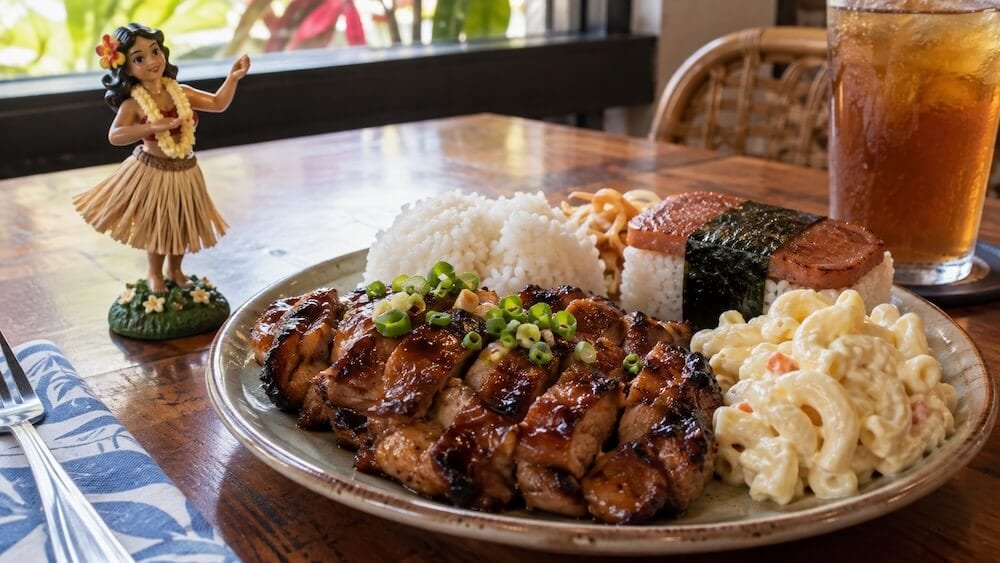
If you have ever walked into a "Hawaiian" restaurant and wondered why the menu has teriyaki chicken, katsu, musubi, chow fun or Korean-style barbecue, you are asking a fair question. A lot of what people call Hawaiian restaurant food today is really Hawaii local food. That local food grew from the people who lived, worked and ate together in the islands.
Traditional Hawaiian food has its own roots. Native Hawaiian food includes foods tied to the land and ocean, such as kalo, poi, fish, limu, pig, sweet potato and breadfruit. Those foods came from Native Hawaiian culture long before plate lunches and takeout counters became part of island life.
The Asian influence came later, especially during the sugar and pineapple plantation era. Plantation owners brought workers to Hawaii from Japan, China, the Philippines, Korea, Portugal, Puerto Rico, Okinawa and other places. Those workers brought their own lunches, cooking styles and comfort foods with them. Over time, those foods became part of everyday life in Hawaii.
That is why a Hawaii-style plate lunch might include rice, macaroni salad and a main dish like teriyaki beef, chicken katsu, kalbi, adobo, garlic shrimp or loco moco. It is not one culture on a plate. It is a local food tradition shaped by plantation workers, immigrant families, Native Hawaiian foundations and generations of people sharing meals.
Japanese food helped influence bento-style lunches, katsu, teriyaki and musubi. Chinese cooking helped shape dishes like chow fun, char siu and stir-fried noodles. Filipino families brought dishes like adobo and lumpia. Korean food influenced barbecue meats and kimchi. Portuguese workers brought sausage and sweet bread. Over time, these foods did not stay separate. People ate together, traded flavors and built something that became distinctly local to Hawaii.
That is also why calling all of it simply "Hawaiian food" can be a little too broad. If a restaurant serves laulau, poi, kalua pig and lomi salmon, it is closer to traditional Hawaiian food. If it serves plate lunches, musubi, katsu, teriyaki chicken and mac salad, it is probably serving Hawaii local food or Hawaiian-style comfort food.
For people from Hawaii, this difference matters because the food tells a story. It tells the story of Native Hawaiian culture. It tells the story of plantation workers. It tells the story of families making do, sharing what they had and turning lunch into something that carried memory, identity and comfort.
So when you see Asian dishes at a Hawaiian restaurant, it is not random. It is part of Hawaii's history. The plate lunch is one of the easiest ways to see how many cultures helped shape the food people still love today.
If the article makes you hungry, the closest Hawaiian-style option I found is Luv Hawaiian BBQ in Huntsville. They serve a blend of Hawaiian-style comfort food and are located at 5000 Whitesburg Drive #120, Huntsville, AL 35802.
Another Alabama option to know about is Olivia's Ohana House in Rogersville. If you were to ask me, this is like home cooking. Check the Facebook Page and call to verify current hours and ordering details before making the drive.
For a bigger road-trip option, L&L Hawaiian Barbecue now lists a South Nashville location. L&L is one of the better-known Hawaii plate lunch chains, with a menu built around items like barbecue chicken, katsu, rice and macaroni salad. Their location page lists Nashville as part of the chain's Tennessee presence.
Locally, also watch for Hawaii-style pop-ups and community food events by Da Kine Rocket City. They have fundraisers every so often. And if you have Hawaii ties, strike up a conversation and you will get some Aloha.
If you want to explore the Asian side of Hawaii's food story, Malou's Kusina in Madison is worth knowing about too. Filipino food is one of the traditions that helped shape Hawaii local food, and Malou's menu includes dishes such as adobo, caldereta, lumpia, lechon kawali and pansit.
I'm so hungry! |



0 Comments
Join the conversation
Be the first to comment
Share your thoughts above.