

How the Tennessee River Helped Shape Madison, Alabama |
Before Madison Station and the aerospace boom, river trade, cotton and a changing transportation network helped shape the Tennessee Valley |
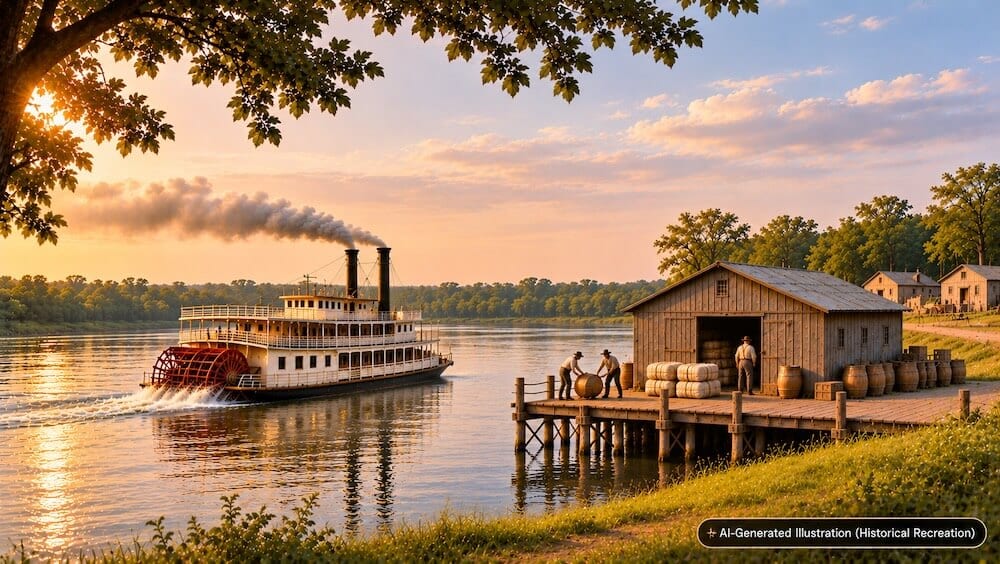
Long before Madison had a downtown, a depot or a city name, the Tennessee River shaped life in the valley.
Indigenous peoples lived, traveled, traded and used the river and its tributaries for generations. The region's history did not begin with American settlers.
As settlers moved into the Tennessee Valley in the early 1800s, fertile land and access to waterways made the area attractive for agriculture and commerce.
That expansion also came through the dispossession of Native peoples and the growth of plantations dependent on enslaved labor.
Cotton Made the Valley Wealthy, and the River Moved It
The rich soils around Madison County supported cotton farming, which became the foundation of much of the region's early commercial economy.
Farmers needed a way to get heavy bales to distant buyers. The Tennessee River connected the valley to broader river routes and ultimately markets including New Orleans.
River ports such as Triana and Whitesburg, near today's Ditto Landing, became important shipping points.
The wealth generated by cotton came at an enormous human cost because enslaved Black workers supplied much of the labor that sustained the plantation system.
The river did not run through the future city of Madison, but its shipping network helped make the surrounding agricultural economy viable.
Huntsville's Canal Was an Attempt to Reach the River
Huntsville's business leaders understood how important access to the Tennessee River was.
In 1831, a canal connection toward Triana opened to help move cotton and other goods from Huntsville toward river transportation.
The effort reflected a simple economic reality: a productive inland community still needed affordable routes to outside markets.
Yet river travel could be difficult. Seasonal water levels and obstacles such as Muscle Shoals complicated shipping, making better transportation increasingly valuable.
Then the Railroad Changed Everything
Madison's direct path to becoming a town came with the Memphis and Charleston Railroad.
Tracks reached the area in 1856. Town lots were laid out near the line and a depot followed, giving rise to Madison Station.
Rail transport offered a faster, more dependable way to ship cotton and other products than relying entirely on river routes.
According to local historical accounts, some settlers and businesses moved from river-port communities such as Triana toward the new railroad town.
In other words, the river helped build the region's economy, but the railroad helped determine where Madison itself would grow.
Madison was incorporated in 1869, and the railroad corridor remains part of the identity of its historic downtown.
A New Chapter: TVA, Power and Industry
The Tennessee River's influence did not end when railroads took over much of the freight business.
The Tennessee Valley Authority, created in 1933, developed dams and other projects that improved navigation, flood control and electric power across the region.
That infrastructure helped create conditions for broader industrial growth, though the valley's transformation involved many other public and private decisions as well.
The river increasingly became part of a regional system for transportation, electricity and recreation rather than simply a route for cotton boats.
From Wartime Factories to Rocket Science
During World War II, the federal government established major military production facilities near Huntsville, including what became Redstone Arsenal.
The Arsenal and later NASA's Marshall Space Flight Center helped attract workers, engineers, contractors and families to the region.
Madison, once a small railroad community, benefited from its proximity to those jobs and eventually expanded into a major residential and business center.
The river did not single-handedly cause the aerospace boom. But its place in the valley's earlier settlement, transportation and infrastructure story is part of the longer chain of changes that preceded it.
Where You Can Still See the Connection
Walk through historic downtown Madison and you're looking at a community organized around railroad tracks rather than a riverbank.
Visit the Tennessee River at Ditto Landing or the Triana area and you can picture the older transportation network that once moved the valley's agricultural goods.
Those places tell different chapters of the same story: waterways helped create the economic region, railroads shifted its centers of commerce and twentieth-century industry transformed its scale.
The next time you cross the Tennessee River or wait for a train in Madison, consider how both helped shape the place we call home.
Resources & Further Reading
City of Madison: The History of Madison The city's account of the arrival of the Memphis and Charleston Railroad, Madison Station and incorporation in 1869.
City of Huntsville: Triana Historical Marker A short history of Triana as a Tennessee River port for cotton and other Madison County agricultural products before the railroad era.
Regional context for Whitesburg, river transportation and the growth of Huntsville and Madison County.
National Register of Historic Places: Madison Station Historic District A historical nomination documenting the railroad's importance to Madison's development.
Tennessee Valley Authority: Navigation on the Tennessee River Explains the river's shipping challenges and TVA's work improving navigation.
Background on the agency's creation in 1933 and its role in flood control, electricity and regional development. |




0 Comments
Join the conversation
Be the first to comment
Share your thoughts above.