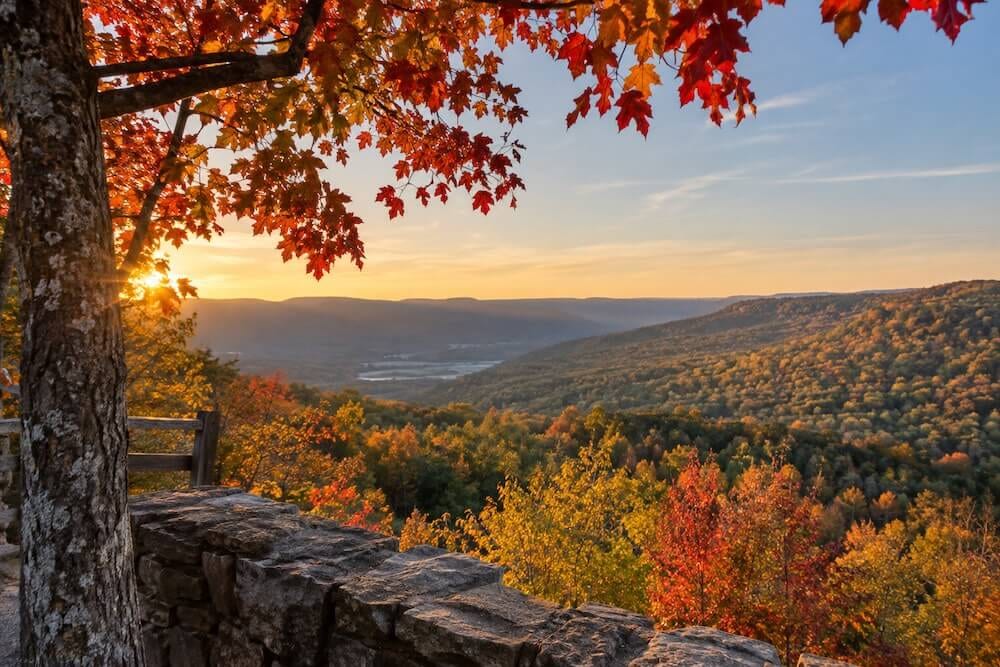
North Alabama does not usually flip from green to fall color overnight. The first changes can start showing up in October, especially in trees that are stressed, exposed to sun or sitting at higher elevations. Around Madison and Huntsville, the better color often arrives in late October and can stretch into early November if the weather cooperates.
The color depends on the tree. Yellow and gold often come from hickories, yellow poplars and some maples. Reds can come from dogwoods, red maples and sourwoods. Sweetgum can show several colors on the same tree, including yellow, red, orange and purple. Oaks usually hold their leaves longer and often turn russet, brown, deep red or bronze later in the season.
Weather matters too. Cool nights, sunny days and enough moisture usually help the colors show better. A dry summer, storms or a stretch of warm fall weather can make the show arrive later, fade faster or look more muted. That is why one neighborhood may look ready for fall while another still looks mostly green.
For Madison families, the easiest first drive is Monte Sano State Park in Huntsville. You can drive up the mountain, stop at overlooks and make it a short outing instead of a full day trip. Burritt on the Mountain and the Land Trust of North Alabama trails also give you Huntsville-area views without going far from home.
Green Mountain Nature Trail is another close option. The covered bridge, lake and wooded path make it one of the prettier fall stops in Madison County. It is an easy place for photos, a slow walk and a quick reset when the weather finally starts feeling like fall.
If you want a longer drive, look toward Bankhead National Forest and the Sipsey Wilderness. Those areas give you forest roads, waterfalls, hiking trails and a bigger leaf-peeping feel without leaving North Alabama. DeSoto State Park and Little River Canyon near Fort Payne are also strong fall-color options, especially if you want overlooks, trails and a full day outside.
A simple plan is to start close in mid to late October, then push farther east or into hillier areas as November gets closer. Check recent photos, park pages and local weather before you go. Fall color is one of those things that can look different every week.
What Different Fall Colors Can Mean
Red leaves often show up on dogwoods, red maples, sourwoods and some oaks.
Yellow and gold leaves often come from hickories, yellow poplars, birches and some maples.
Orange leaves can come from certain maples, sweetgum and some oaks.
Bronze and brown leaves often show up later on oaks, especially after other trees have already dropped.
Purple or mixed-color leaves can appear on sweetgum and some maples.
Easy Fall Color Drives From Madison
Monte Sano State Park, Huntsville
Close to Madison and good for a short drive, overlooks, picnic stops and easy trails.
Green Mountain Nature Trail, Huntsville
A quieter fall stop with a lake, covered bridge and wooded walking path.
Burritt on the Mountain and the Land Trust trails, Huntsville
Good for views, trails and a close-to-home fall outing.
Bankhead National Forest and Sipsey Wilderness
A better pick for a longer drive, forest roads, waterfalls and bigger woods.
DeSoto State Park and Little River Canyon, Fort Payne area
Worth considering for a full day trip when the color gets stronger across northeast Alabama.
Before You Go
Fall color changes by weather, elevation and tree type. Before making a longer drive, check the park or tourism page, look for recent photos and watch the forecast. A cool, sunny day after a few chilly nights is usually a better bet than a hot afternoon after heavy rain.






0 Comments
Join the conversation
Be the first to comment
Share your thoughts above.