
How To Donate Money After a Disaster Without Getting Scammed |
Want to help after a local or overseas disaster? Learn how to check charities, avoid scams, understand fees and give money where it can help. |
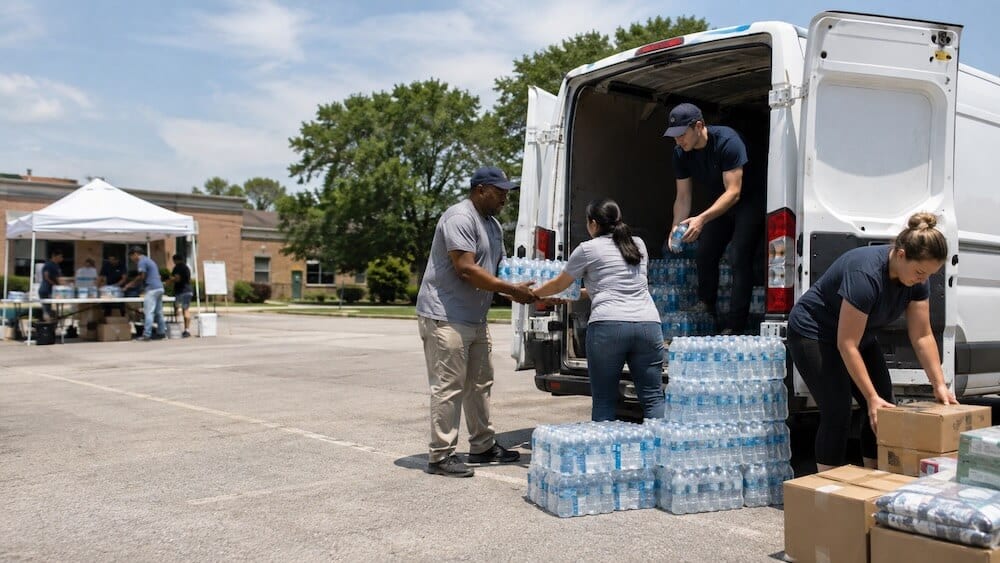
When a disaster happens, people want to help fast. A tornado hits. A hurricane floods neighborhoods. Wildfires destroy homes. An earthquake hits another country. Within hours, donation links start showing up online.
That is where people get nervous. They want to give, but they do not want their money swallowed by fees, a vague fundraiser or a scam pretending to help victims.
That concern is fair. The Federal Trade Commission (FTC) warns that scammers often create fake charities after disasters and may use names that sound official. The FTC recommends donating to charities you know and trust, checking a charity's website before giving through a text link and avoiding payment methods like gift cards, wire transfers or cryptocurrency-only requests.
Start With the Kind of Help You Want To Give
Disaster giving usually falls into two buckets. The first is immediate relief. That is food, water, shelter, medical care, cleanup supplies and emergency support. The second is long-term recovery. That is rebuilding homes, replacing lost items, helping local schools recover and supporting families months after the headlines fade.
If you want speed, give to an organization already working in disaster response. If you want to support local recovery, look for community foundations, local nonprofits, churches or mutual aid groups with clear ties to the area.
Do Not Judge a Charity by Overhead Alone
A lot of donors ask, "How much goes to the cause?"
Charities still have to pay trained staff, move supplies, rent trucks, run websites, answer phones, protect donor data and coordinate help. A charity with no overhead may sound nice, but disaster work takes planning and people.
Check the Charity Before You Give
Before donating, search the charity's name with words like "complaint," "review," "rating" or "scam." The FTC recommends using tools like BBB Wise Giving Alliance, Charity Navigator, CharityWatch or GuideStar to check out charities before sending money.
For a local disaster, look for organizations with an address, staff, board members, clear donation pages and a history of working in that community. For a foreign disaster, look for organizations already operating in that country or region before the disaster happened.
Local Disasters: Give Close to the Ground
For a local disaster, money can move quickly through organizations already trusted in the area. That could be a local community foundation, a regional food bank, a church with a public relief fund, a school foundation or a nonprofit that already serves vulnerable families.
Ask who manages the fund, whether donations are tax deductible, how the money will be distributed and whether the organizer posts updates. If the fundraiser is for a specific family, make sure it was created by the family, a close friend or a verified organizer.
Foreign Disasters: Use Groups Already Working There
For overseas disasters, it is usually safer to give through established humanitarian groups that already have staff, local partners or supply chains in the affected area. Shipping boxes of random items overseas can be expensive and slow. Money lets relief workers buy what is needed closer to the disaster zone.
The Center for Disaster Philanthropy provides disaster giving resources and information about long-term recovery needs.
Crowdfunding can be powerful when the need is specific and personal. A family loses a house. A child needs medical travel. A local business owner is trying to reopen. In those cases, direct giving can feel meaningful.
Crowdfunding also carries risk. Before giving, check who created the fundraiser, who receives the money and whether the story can be verified. If the fundraiser claims to represent a family or disaster victim, look for confirmation from the family, a local official source or someone close to the situation.
Also watch for platform fees or payment processing fees. A fee does not automatically mean something is wrong, but donors should know whether their full gift reaches the recipient or whether a portion covers processing.
GoFundMe is a popular platform, however, a link from GoFundMe should still be verified.
Watch for Red Flags
Slow down if a fundraiser pressures you to give immediately, refuses to answer basic questions or asks for payment by gift card, wire transfer or cryptocurrency. The FTC lists those payment methods as warning signs of a scam.
Also watch for look-alike names. Scammers may choose names close to real charities. Type the charity's website yourself instead of clicking a random link in a text, email or social post.
A Simple Giving Checklist
Before donating, ask...
If you cannot answer those questions, pause. A real charity will still accept your donation after you take ten minutes to verify it.
Wrap Up
The best disaster donation is not always the fastest click. Give quickly when you know the organization. Slow down when the link is new, emotional or hard to verify.
For local disasters, start with trusted local nonprofits, community foundations, churches and schools that can explain how the money will reach affected families. For foreign disasters, use established relief organizations with experience in the country or region.
|
6 Comments
Join the conversation
I'm not sure telling people to slow down after a disaster is always the right call. Sometimes families need help that same day and waiting costs them. Just something to think about.
Local orgs are fine but sometimes they run out of capacity fast. The big national ones are not always worse, they just move differently. Overhead gets a bad rap.
Honestly I never thought about scammers picking names that look like real charities. That is a sneaky one. I just type whatever link gets sent to me in a group chat.
Charity Navigator is actually pretty solid. Looked up a tornado relief fund on there after the last one hit and found out it had zero transparency ratings. Saved me from a bad donation.
I'm not giving my money to anything that only accepts gift cards. Huge red flag and I've seen it twice already after the storms last spring. Good reminder here.
The part about crowdfunding is so true. My coworker shared a GoFundMe after the storms last spring and nobody could actually confirm who set it up. Took me 20 minutes to figure out it was legit. Worth it though.